How it works
Keep the hardware, change the key
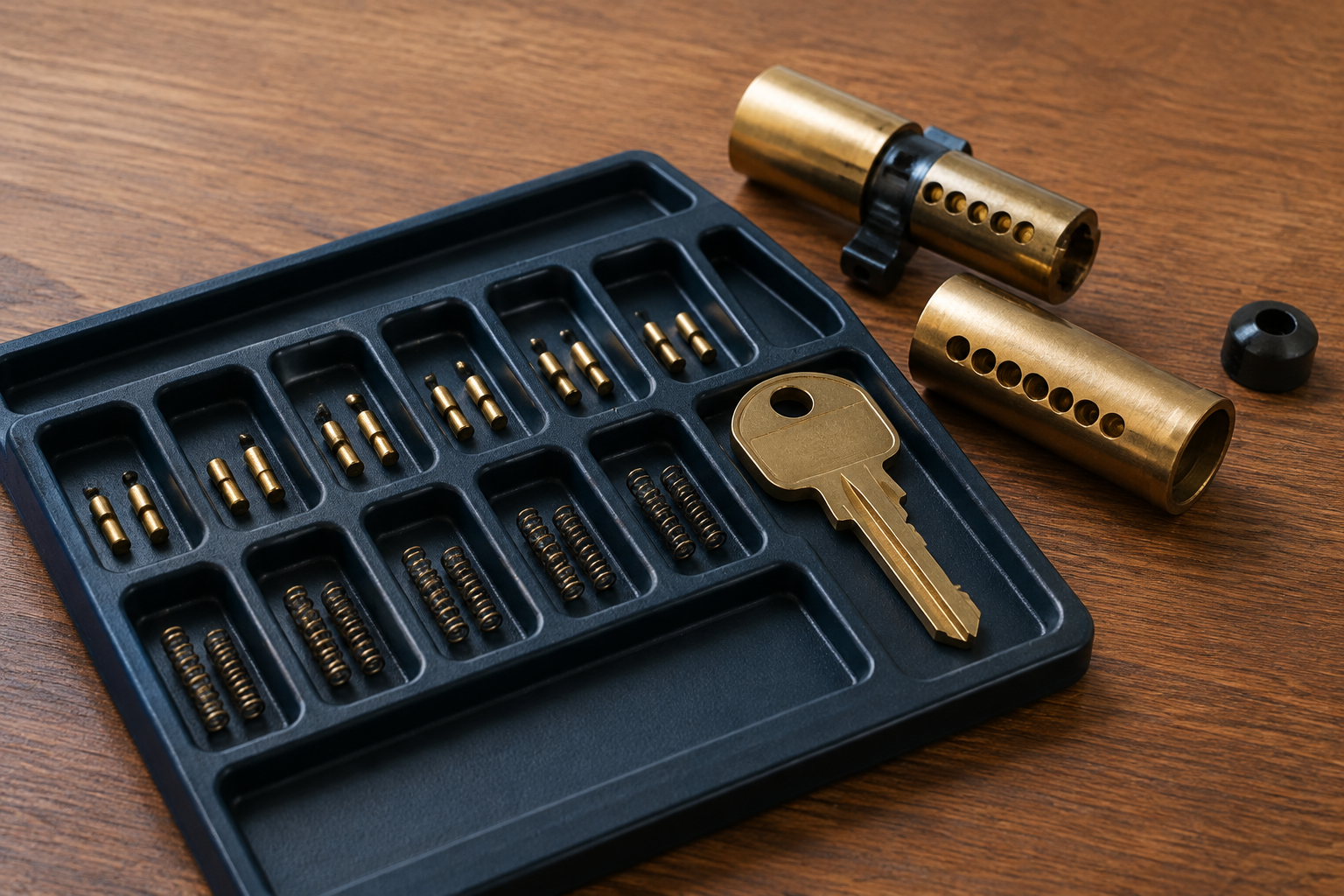
Inside a standard pin-tumbler lock, a stack of small spring-loaded pins has to line up exactly at the shear line before the plug can turn. Each pin is a specific height, and only a key cut to match those heights raises every pin to the right spot at once. Rekeying takes the cylinder apart and swaps that set of pins for a new one, matched to a different key. Afterward the old key no longer lines the pins up, so it simply stops working, and a new key takes its place.
The lock body, the deadbolt, the latch, and the exterior trim all stay on the door. Nothing about how the lock looks or mounts changes, and from the outside there is no sign anything was done. That is why rekeying is usually the quicker, less disruptive, and less expensive route when it applies — it is a change to the key, not the lock.
For rekeying to be the right choice, two things have to be true: the lock must be in serviceable mechanical condition, and it must use a keyway that can be pinned to your key. A lock that binds, has a worn plug, or is the wrong function for the door is a repair or replacement question first.