Open 24 hours Serving Tucker & nearby DeKalb County (866) 306-9624
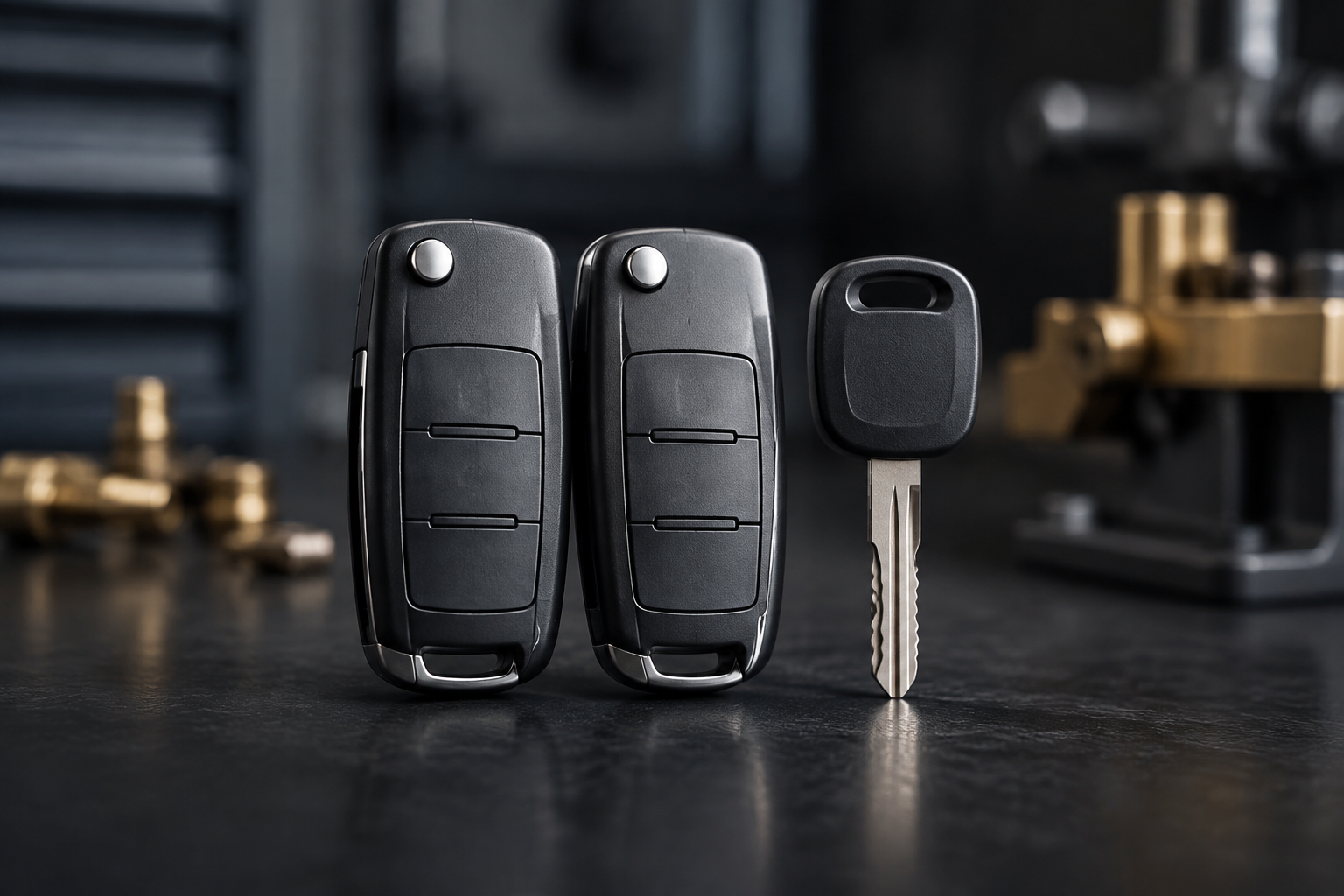
Two replacement vehicle key fobs and a metal car key
Lost keys, damaged keys & spares

Car Key Replacement in Tucker, GA

Replacement options for many mechanical keys, transponder keys, remote-head keys, and push-to-start smart keys, whether you have one key left or none.

Open 24 hours Many common makes & models Cut & programmed on site
Information we need

Call with your vehicle details

What is possible, and how long it takes, depends on four things: the vehicle year, make, and model; the key type; whether any working key still exists; and, for the newest vehicles, whether the key can be handled on site or needs parts ordered first. Duplicating from a working key is quick. All-keys-lost work involves reading the vehicle and generating a key from scratch, sometimes with a manufacturer security step, and it is not available for every model.

Service happens where the vehicle is parked, anywhere in the Tucker service area. Be ready to show identification and proof that the vehicle is yours or that you are authorized to have a key made. This page covers making keys; if you are simply locked out with the key inside, see lockout service, and the automotive locksmith page covers ignition problems and the immobilizer in more depth.

Key categories

What can be replaced

Which category you are in decides the tools, the time, and whether the job can be finished in one visit.

Mechanical keys

A plain cut blade with no electronics, common on vehicles built before the early 2000s. Cut from a working key or by code from the lock. No programming needed, so usually the quickest job — though a decades-old lock cylinder may need servicing if it is worn.

Transponder keys

A cut blade with a chip in the head that the ignition antenna reads. The blade is cut and the chip is programmed to the vehicle so it will start. Adding one to a working key is straightforward; all-keys-lost takes longer.

Remote-head keys

A transponder key combined with lock, unlock, and often trunk or panic buttons in one unit. Both the chip and the remote functions are programmed, and the button layout has to match the vehicle.

Smart / proximity keys

A fob for push-to-start vehicles, usually with a hidden mechanical blade for the door. Availability and programming vary a lot by make, model, and year. Some can be done on site, some need the part ordered, and a few are dealer-only for all-keys-lost.

Two situations

Spare key vs. all keys lost

You still have a working key

This is the simpler case. A new blade is cut to match the original, the chip or fob is programmed alongside the existing key, and you leave with a working spare. Everything can usually be verified against the key you already have. Doing this before a key is lost is the simplest way to avoid being stranded later, and it is worth booking whenever you are down to a single key.

You have no working key

The vehicle has to be accessed and read to recover or generate the key information, then a key is cut and programmed. It takes longer, sometimes involves an added security wait built in by the manufacturer, and is not available for every vehicle. Have your registration, title, or insurance card ready, along with a photo ID. If the vehicle cannot be done on site, that is identified early rather than after time is spent.

The process

Cutting and programming, step by step

Making a working car key is two distinct jobs done in sequence. First the mechanical blade has to be cut so it operates the door lock and, on vehicles that still have one, the ignition. This is done either by decoding the existing lock, by copying a working key, or from a key code tied to the VIN. On a vehicle with a mechanical or transponder key the blade is cut on a machine; on a smart-key vehicle the hidden mechanical blade is cut the same way, even though it is rarely used day to day.

Second, any electronics in the key are programmed to the vehicle. The transponder chip has to be registered with the immobilizer so the engine will run, and a remote-head key or smart fob also has its lock, unlock, and trunk functions paired. This is done through the vehicle's diagnostic port with equipment that talks to the car's security module. When a working key already exists, the new key is usually added alongside it quickly. When all keys are lost, the module has to be accessed in a recovery mode first, and some manufacturers impose a timed security wait before a key can be added.

Every finished key is tested the same way: it should unlock and lock the doors, start the engine, and — for a smart key — be detected from the driver's seat without the old key present. If the vehicle turns out to need a part that is not on hand, or a procedure that cannot be done outside a dealer, that is identified during the assessment rather than after the work starts.

One point worth understanding about all-keys-lost work: on some vehicles, adding a new key means the system has to be reset in a way that invalidates any key that is still out there but not present. If you have a key that is lost rather than destroyed — dropped somewhere, left with someone — say so, because it changes whether that key will still work afterward. For most people that is the desired outcome, since a lost key no longer opening the car is the same benefit a rekey gives a house. But it is better to decide that on purpose than to discover it later.
What varies by vehicle

Why two cars of the same age can be different jobs

Key systems are set by the manufacturer, and they change from one model generation to the next and sometimes within a generation. Two vehicles that look similar and are the same model year can use different transponder types, different programming procedures, and different security requirements for all-keys-lost. Mainstream, high-volume models tend to be well supported and quick. Luxury brands, low-volume models, and the very newest proximity systems are more likely to need parts ordered or to be dealer-only when every key is gone.

This is why the year, make, and model are the first questions on the call. With those, it is usually possible to say on the phone whether the job is a short visit in a parking lot, something that needs a part ordered first, or something that has to go to the dealer. Saying so up front saves everyone time and avoids a wasted trip.

Key-code information from your original paperwork or the dealer can speed up cutting, and the VIN — visible through the windshield on the driver's side and on the door jamb sticker — helps with ordering the right blank and with some programming. Neither is strictly required for every job, but both help.

Also covered

Related key work

Worn or damaged keys

A key that has cracked, bent, or worn down at the cuts can be cut fresh and the chip transferred or re-paired, so it stops being the weak point in your day.

Remote not working

Buttons that have stopped responding may need a fresh battery, a re-sync to the vehicle, or a new fob shell if the case has cracked and the contacts are failing.

Broken key extraction

A key snapped off in a door lock or the ignition is removed, and a fresh key is cut so the same thing does not happen again. See lock repair.

After you have a new key

Keeping a replacement key working

A new key lasts longest when it is not the only one. As soon as you have a working key again, having a second one cut and programmed means a future loss is an errand rather than a tow and an all-keys-lost job. Keep that spare somewhere other than the vehicle — a drawer at home, a desk at work — not clipped to the same ring as the one you carry.

For remote and smart keys, the fob battery is the usual weak point. Most give some warning through a dashboard message before they fail completely, and swapping the coin cell is something you can do yourself with the right battery type. If a smart key stops being detected, try holding it against the start button or the marked spot on the column; most vehicles have a backup way to read a fob with a dead battery.

Protect the key from the two things that kill them early: physical stress and heat. A heavy keyring hanging off a key in the ignition wears the cylinder and can crack the key head over time. A fob left on a black dashboard in summer sun cooks its electronics. Neither is dramatic, but both shorten the life of a key that took time to make.

Local context

Car key calls around Tucker

Most replacement-key calls in the Tucker area are one of two kinds: a driver who has just lost their only key and needs to get moving again, or someone being sensible and getting a spare cut while they still have one. The apartment communities across Tucker, Clarkston, and Stone Mountain generate a steady stream of the first kind, and the retail and office areas around Northlake and Embry Hills produce lockouts and dead-fob calls during the day.

Because the work comes to the vehicle, an exact location matters — in a large apartment complex or shopping center, give the building number, parking row, or nearest storefront along with the address. The service areas page covers coverage by community, the contact page lists what to have ready, and the note on preparing for a replacement car key is a short checklist you can run through before you call.

Related pages

Other services that may apply

Automotive locksmith

Lockouts, ignition problems, and how the immobilizer works.

View →

Lockout service

Keys locked in the cabin or trunk.

View →

Lock repair

Broken key extraction and ignition cylinder wear.

View →

Service areas

Where automotive work is available around Tucker.

View →

Contact

What to have ready so the first call is useful.

View →

Preparing for a car key

A short checklist to run through before you call.

View →
Common questions

Car key replacement FAQs

Can you replace a key if I have none left?

For many vehicles yes. All-keys-lost work involves reading the vehicle and generating a key, which takes longer than cutting from a working key and is not possible for every model.

Do you program the key to the car?

Transponder keys, remote-head keys, and smart keys usually need programming so the immobilizer recognizes them and remote functions work. This is part of the service where supported.

Is a spare key worth getting before I lose one?

Yes. Cutting and programming a spare from a working key is quicker and simpler than starting from all-keys-lost later.

What if my key still turns but the buttons stopped working?

The remote may need a battery, re-syncing, or replacement of the fob shell. Describe what still works when you call.

Do you need the VIN?

The year, make, and model are the essentials. The VIN helps for ordering the right blank and for some programming, and it is on the dash and the driver door jamb.

My key turns but the car will not start. Do I need a new key?

Not necessarily. That is often an immobilizer, battery, or ignition issue rather than the key. The automotive page explains how that is diagnosed.

Talk through a replacement car key

Call (866) 306-9624
Call (866) 306-9624