Operate and inspect
The door and lock are worked through a full cycle, open and closed. The frame, hinges, gap, strike, and fasteners are checked before anything is disassembled.
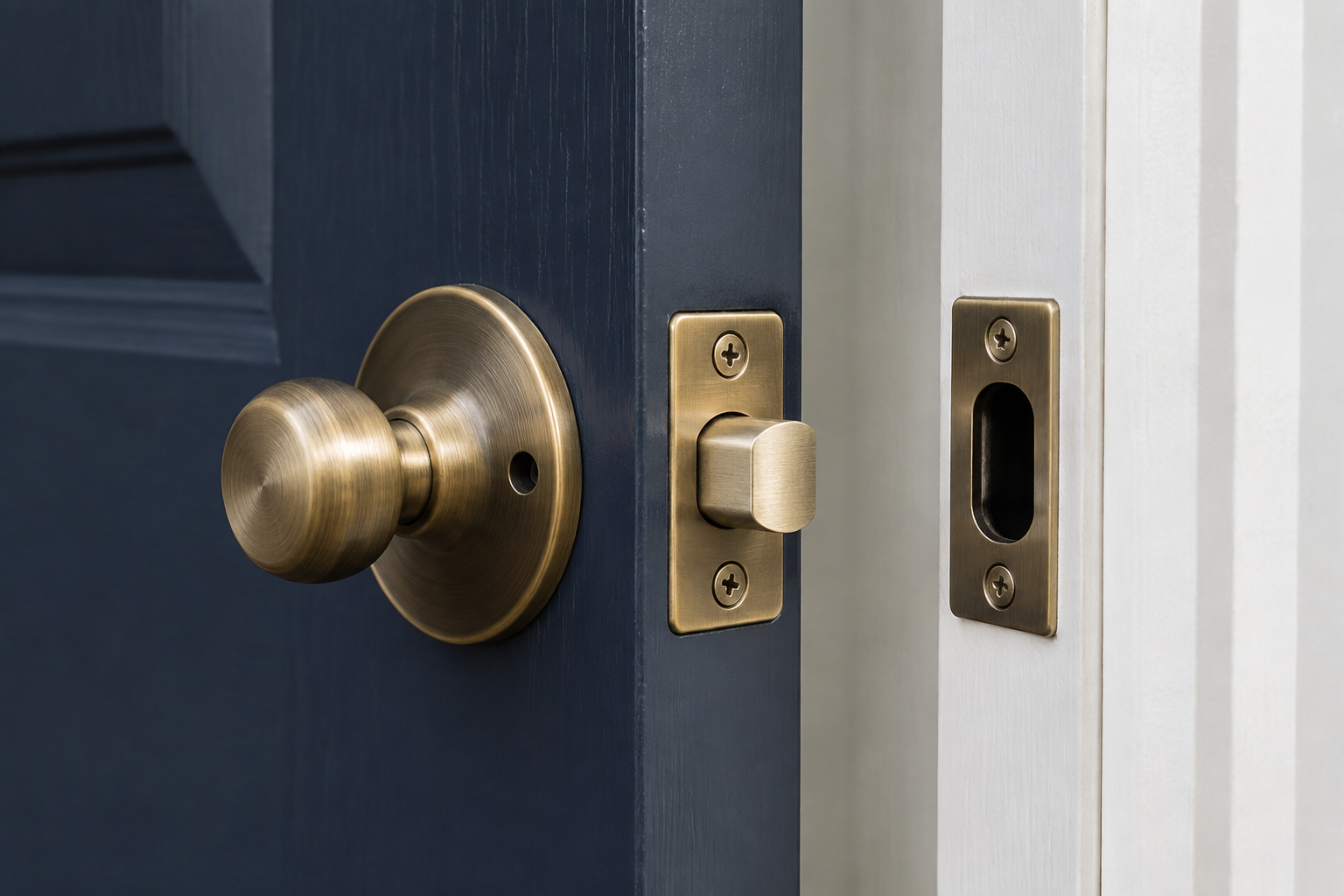
Service for locks that are hard to turn, doors that do not latch cleanly, and hardware that has worked loose. The cause is found before any part is changed.
Door alignment, strike placement, loose screws, a worn key, weather changes, and worn internal parts can all produce the same handful of symptoms. A key that drags, a deadbolt that will not throw fully, a latch that rattles instead of catching, and a knob that spins loosely each have several possible causes, and they are not interchangeable. The fix for a sagging door is at the hinges; the fix for a worn key is a new key; the fix for a failed spring cage is a new lockset. Guessing wrong means paying for the wrong repair.
Replacing a cylinder because a key is stiff, when the real issue is a door that has dropped a few millimetres over a humid summer, leaves you with new hardware and the same problem. So the visit starts by operating the door and the lock, checking the frame, the gap, the hinges, and the strike, and narrowing down what is actually wrong before anything is taken apart.
This page covers the mechanical side of locks. If the issue is really about old keys rather than a fault — you moved, or lost a key — see lock rekeying. If you are locked out, see lockout service.
This is a starting point, not a diagnosis. The same symptom can have more than one cause, and some only show once the hardware is off the door.
| What you notice | Common causes | Typical fix |
|---|---|---|
| Key is hard to insert or turn | Worn key, debris in keyway, worn plug, dried lubricant | Cut a fresh key, clean and service the cylinder, or replace the cylinder |
| Deadbolt will not throw unless you lift the door | Door sag, hinge wear, misaligned or undersized strike | Adjust hinges, reposition or enlarge the strike, realign the bolt path |
| Latch does not catch when the door closes | Strike out of position, weatherstripping too thick, closer set too weak, warped door | Move the strike, adjust the stop or closer, tune the gap |
| Knob or lever is loose or sagging | Loose mounting screws, worn spindle, failed spring cage | Retighten and secure fasteners, or replace the worn lockset |
| Lock turns but the bolt does not move | Broken tailpiece, stripped cam, internal breakage | Replace the failed internal part or the lock |
| Key goes in but will not come out | Worn key catching a pin, damaged keyway, plug rotation issue | Extract carefully, cut a fresh key, service or replace the cylinder |
A lock is only as accurate as the door it is mounted in. A deadbolt has to pass through a hole in the frame that is barely larger than the bolt itself, and it only takes a small shift for the two to stop lining up. Georgia's humidity swing is enough to do it: wood doors and frames take on moisture in summer and give it back in winter, so a door that latched perfectly in January can bind in July. Add years of the door being pulled shut hard, and the hinges wear, the top of the door drifts toward the latch side, and the bolt starts catching the edge of the strike.
The tell-tale signs are consistent. If the lock operates smoothly with the door open and only sticks when it is closed, the door has moved. If you have to lift the door by the handle to get the deadbolt to turn, the door has dropped. If the problem is worse in certain weather, it is seasonal movement. In all of those cases, forcing the lock is treating a symptom — and forcing it is how a deadbolt bolt gets bent or a key snaps off inside.
The repair in these cases is at the hinges, the strike, or the frame, not inside the lock. Realigning a door so the bolt drops cleanly through the strike often makes a lock that felt like it was failing feel new again. The note on why a key sticks goes through the same causes for residential doors.
Deadbolts are simple and durable, so when one gives trouble it is usually alignment (the bolt not meeting the strike) or a worn cylinder, not the bolt mechanism itself. A deadbolt that turns halfway and stops is almost always hitting the frame.
Knob and lever locksets have more moving parts — springs, a spindle, a spring cage — and those wear. A lever that droops, a knob that turns without retracting the latch, or a handle that has gone sloppy is usually a failed internal cage, and on many builder-grade sets the fix is a new lockset rather than a rebuild.
Mortise locks, common on older and commercial doors, are a whole mechanism inside a pocket in the door edge. They are repairable and long-lived, but the internal parts — the hub, the springs, the trim posts — do fail, and getting the case out to service it takes more time than a bored lock.
Storefront and narrow-stile hardware lives on aluminum-and-glass doors that move and sag with heavy use. The common failures are a worn deadlatch, a hook bolt that no longer engages the keeper, and a pivot or closer that has let the door drop. The commercial locksmith page goes into this side further.
Electronic deadbolts add a motor and a battery to a standard bolt. Most of their problems trace back to the door: a bolt fighting a misaligned strike draws more current, drains batteries fast, and eventually strips the drive. Fixing the alignment usually fixes the lock.
Repair makes sense when the lock body and the cylinder are sound and the fault is alignment, a fastener, a strike, or a single internal part. A worn spring, a loose set screw, a strike in the wrong place — these are quick, lasting fixes on hardware that has plenty of life left.
Replacement is the better route when hardware is worn throughout, physically damaged, corroded, or the wrong function for how the door is used. A lock that has been drilled, one where the finish is flaking and the plug is sloppy, or a residential-grade lock on a commercial door that cycles hundreds of times a day — repairing those only delays the next failure. Replacement is also right when you want capability the current lock does not have, such as a keypad or a higher cylinder grade.
Cost is part of the decision, but so is whether the repair will hold. There is no point spending half the price of a new lock to keep a lock that will fail again in six months. The recommendation is based on the condition of the whole assembly, and it is explained rather than just handed down. The rekey-or-replace note covers the related question of when you need different keys versus different hardware.
The door and lock are worked through a full cycle, open and closed. The frame, hinges, gap, strike, and fasteners are checked before anything is disassembled.
The likely cause is identified and the options are laid out — adjust, service a part, or replace — with the reasoning behind the recommendation.
The work is done and the door is tested again, closed and locked, several times, to confirm the bolt and latch engage cleanly and the key turns without force.
Wood doors and frames are not fixed objects. They take on moisture when the air is humid and give it back when it is dry, and in Georgia that swing is large enough to change how a door sits in its opening. A door that latched with a light pull in winter can bind against the frame in the middle of summer, and a deadbolt that dropped cleanly through the strike in spring can start catching its edge by August.
This matters for repair decisions. If a lock only gives trouble in one season, the hardware is probably fine and the fix is a small alignment allowance — adjusting the strike or the stop so the door works across the full range of movement rather than perfectly at one point and badly at the other. Replacing a cylinder to solve a seasonal bind is treating the wrong part.
Weatherstripping plays into this too. A fresh, thick seal can add just enough resistance that a tired closer or a slightly worn latch no longer pushes the door home. When a door that used to latch stops latching after new weatherstripping goes on, that is usually the cause, and the answer is tuning the gap rather than forcing the door.
The Tucker housing stock has a lot of homes from the 1960s through the 1980s, and that is where most residential repair calls come from. Original wood doors and frames in Tucker, Embry Hills, and Stone Mountain have moved through decades of seasons, so sagging doors, misaligned strikes, and worn original cylinders are common. Newer townhome developments tend to have alignment issues instead — a door that was hung fast and never quite adjusted — which are usually a quick strike or hinge correction.
On the commercial side, the storefronts around Northlake and the small businesses along Main Street run into closer problems and worn latches from heavy daily use. A door that "will not lock at closing" is almost always the closer or the alignment rather than the cylinder, and that is covered further on the commercial locksmith page.
The service areas page describes coverage by community, and the contact page lists what to have ready so the first call is useful.
When the hardware is fine and only the key needs to change.
View →Home deadbolt, latch, and handleset work.
View →Storefront hardware, closers, and mortise locks.
View →For a lock that has seized or a bolt that will not retract.
View →Ignition cylinder problems and broken key extraction.
View →The most common home causes, explained plainly.
View →Common causes are a door that has shifted so the bolt catches the strike, a worn key, debris in the keyway, or wear inside the cylinder. The cause is checked before anything is replaced.
Many locks can be repaired when the body and cylinder are still sound. Replacement is sensible when hardware is worn out, damaged, or the wrong function for the door.
Usually not. That points to the door sagging or the strike being misaligned, so the bolt no longer meets the hole cleanly.
No. Forcing a stiff lock can break a key in the cylinder or damage the plug. Have it looked at while it is still working.
Yes. A door that will not catch is usually a strike position, a stop, or a closer issue, all of which can be adjusted.
Household oil attracts grit and makes things worse over time. A proper dry lubricant is better, but if a lock needs lubricating often, something mechanical is usually the real cause.