Rekeying after staff changes
Retire keys held by former employees or tenants by rekeying compatible cylinders, keeping any master plan intact. The rekeying page explains how the process works and where it stops.
Lock rekeying →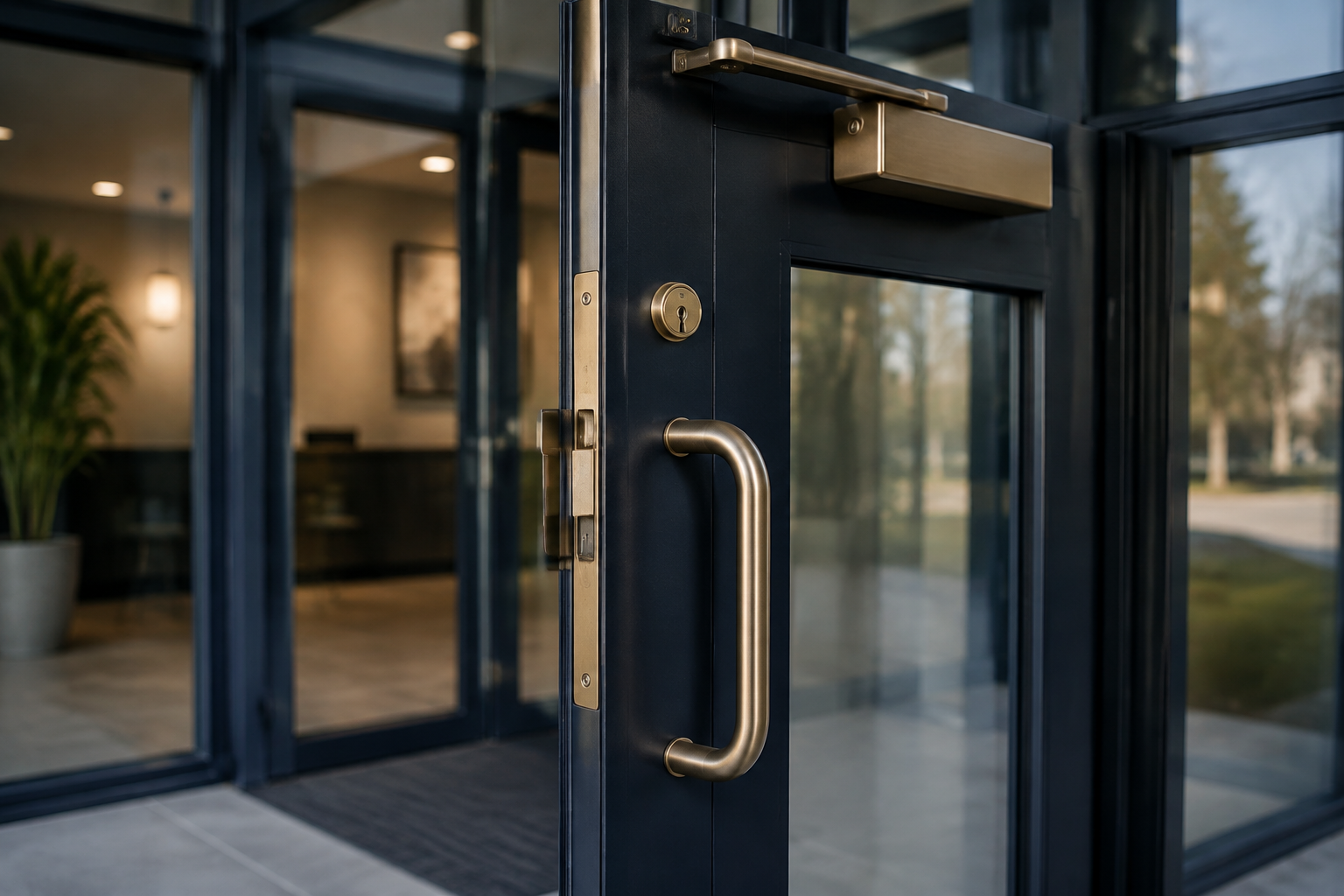
Support for storefronts, offices, and rental properties across Tucker: hardware that will not secure at closing, access changes, and keying that has grown hard to manage.
A commercial door problem rarely affects just one person. Staff cannot open in the morning and the day starts late. A door will not lock at closing and someone has to wait for it. A set of keys is unaccounted for after an employee leaves, and now nobody is sure who can get in. On a business door the closer, the frame, the latch, the strike, and the lock all interact, so the symptom you notice is often not where the problem actually is.
Locksmith Services Of Tucker services offices, retail spaces, warehouses, restaurants, and multi-tenant buildings at the property, throughout Tucker and nearby DeKalb County. Building management rules may apply for leased space, and the person requesting work should be authorized to approve lock changes. For planned work such as a rekey across several suites, calling ahead with the door count and hardware types lets the visit be scheduled properly.
Business owners who also need help at home will find the residential locksmith page covers that side, and the same phone number handles both.
These are the calls that come in most often from Tucker-area businesses and property managers.
Retire keys held by former employees or tenants by rekeying compatible cylinders, keeping any master plan intact. The rekeying page explains how the process works and where it stops.
Lock rekeying →Service for narrow-stile aluminum storefront locks, mortise locks, cylindrical locksets, deadlatches, and the strikes they work against. Diagnosis before replacement is on the lock repair page.
Lock repair →Planning and keying so one key opens many doors while individual keys are limited to their assigned openings. Done well it stays maintainable; done casually it drifts into a drawer of unlabeled keys.
Discuss a plan →Adjust closers and address doors that drag, spring back, or slam so the latch engages the strike on every close. This is the usual cause of a door that "will not lock" at closing.
Lock repair →Entry help for a business door when keys are lost or the lock has failed, at any hour. What to have ready is on the lockout service page.
Lockout service →Guidance on tracking which keys were issued to whom, so returned and missing keys are easier to account for and a future rekey is smaller in scope.
Read more →Commercial doors take far more cycles than residential doors — a busy retail entrance can be opened several hundred times a day — and they usually carry a closer, a panic device or deadlatch, weatherstripping, and a sweep, all of which affect how the lock behaves. When a manager reports that a door "will not lock," the cylinder is rarely the problem. More often the closer has drifted out of adjustment so the door is not fully closing before the latch tries to engage, the strike has shifted, the weatherstripping has compressed and thrown the alignment off, or the hinges have worn.
The same is true of a key that has become hard to turn across a whole suite of doors. If every lock in the building suddenly feels stiff, the likely cause is worn keys being copied from copies, not a dozen cylinders failing at once. Cutting fresh keys from a factory original often solves it. If one door is stiff and the rest are fine, that door gets looked at individually.
Starting with diagnosis keeps a commercial repair from turning into a parts-swap that does not hold. It also protects the keying plan: replacing a cylinder without matching it to the existing system can quietly break a master key setup that took planning to build.
Who needs to open which doors, and at what times of day? Which openings are shared by everyone and which should be restricted to a few people? Is there an existing master key plan, and is its paperwork — the bitting list and the door schedule — still current and stored somewhere safe? Are any doors on a fire-rated or life-safety path where the hardware function cannot be changed casually, because the exit has to work without a key from the inside at all times?
Working through those before hardware is ordered is what keeps a business keying plan usable a year later. A plan nobody can explain tends to collapse back into a ring of unmarked keys and a lock that gets drilled because the right key cannot be found. A simple written record — which key opens what, and who holds each one — makes every future change smaller and cheaper.
For a business changing hands, or a new tenant taking over a space, the safe assumption is that keys exist that you do not know about: former staff, the previous tenant, contractors, cleaning crews, the landlord. Rekeying every exterior and sensitive interior opening at handover resets that, the same way move-in rekeying does for a home.
Not every commercial access problem is solved with a brass key. Keypad locks remove the key from routine use for a back door or a stockroom, so there is nothing to lose or copy, and the code can be changed when someone leaves instead of rekeying the cylinder. They still have a mechanical override and still need a door that is aligned, because a keypad deadbolt straining against a misaligned strike wears out its motor quickly.
Electronic access control — card readers, fobs, and networked locks — is a larger project that usually involves other trades for wiring and software, but the mechanical side still matters: the door, the frame, the closer, the strike, and the request-to-exit hardware all have to work together, and an exit door must always open from the inside without a credential. If you are planning a system, the mechanical assessment of each opening is a sensible first step.
For businesses that want tighter control over who can cut a key, a restricted keyway is worth discussing. Keys can only be duplicated through the system, so a departing employee cannot quietly keep a working copy. It is more to set up and manage, but for a property with real key-control concerns it removes a common weak point. This is planned alongside any rekeying or master key work rather than bolted on later.
Aluminum storefront, hollow metal, solid wood, and glass doors each take different hardware and preparation. Frame condition and the gap around the door affect whether alignment can be corrected or the frame needs attention first.
Commercial hardware is graded for cycle life. A residential-grade lock on a high-traffic commercial door will wear out fast, so the grade is part of any replacement recommendation.
Keyed alike, keyed different, or mastered — and whether the keyway is a standard one or a restricted system. This determines what can be rekeyed on site versus what needs ordered parts.
Business address and suite, the number and type of doors, the hardware, and whether a master plan is involved. Photos of the door edge and the lock face help.
The details point to a repair, a rekey, an alignment adjustment, or replacement. Scope for a multi-door job is confirmed before work begins.
An owner, manager, or authorized representative approves the work, and any building management requirements are handled.
Every affected door is cycled with the closer, latch, and lock working together, and the keying is verified against the plan before the job closes.
Tucker has a dense band of commercial property. The Northlake area around the mall and LaVista Road carries retail, restaurants, and multi-story offices. Mountain Industrial Boulevard and the corridors toward Doraville and Chamblee hold warehouses, distribution space, and light manufacturing. The Main Street district in Tucker itself is small storefronts, professional offices, and service businesses. Each of those settings tends to produce a different call: retail wants storefront hardware and after-hours lockouts, warehouses want overhead-adjacent man-doors and key control, offices want mastered suites and clean turnover between tenants.
Multi-tenant buildings add a coordination step, because the property manager usually controls the common-area and exterior keying while individual tenants control their own suite. Sorting out who owns which openings before work starts avoids a rekey that accidentally locks a tenant out of the front door. The service areas page covers the commercial corridors community by community, and the contact page lists what to have ready.
For a business owner who also drives for work, the automotive locksmith page and car key replacement page cover vehicle keys and lockouts, handled wherever the vehicle is parked.
Change the working key across compatible cylinders without full replacement.
View →Storefront and office hardware that binds, drags, or will not secure.
View →Business lockouts and what to have ready when you call.
View →Home lock work for business owners and property managers.
View →Coverage across Tucker and the surrounding commercial corridors.
View →Plain explanations of rekeying, key wear, and access questions.
View →Yes. Compatible cylinders can be rekeyed so former keys no longer work, and a master key plan can be kept intact during the change.
Common narrow-stile storefront hardware, mortise locks, and cylindrical locksets can be serviced. The specific model and condition are checked on site.
A keying plan where one key opens many doors while individual keys open only their assigned doors. It needs planning and a written record so it can be maintained over time.
Usually not. That points to the closer, the alignment, the weatherstripping, or the latch rather than the cylinder, and it is diagnosed before parts are replaced. See the lock repair page.
An owner, manager, or someone otherwise authorized to approve lock changes. For leased space, building management rules may also apply.
A simple door schedule and key-issue list can be provided so future changes are smaller and the plan stays understandable.